Webinar: So you think you can do PAR (for your PhD)?
%20(1).png)
15 June 2026: A peer panel of Feminist Participatory Action Research (FPAR) enthusiasts at different stages of their PhDs and research lives discussing tensions, dilemmas, and creative compromises of doing (F)PAR inside institutions that weren't necessarily built for it.
Webinar Recording
This webinar brought together a peer panel of FPAR enthusiasts based in Western Australia (all the way down under!), at different stages of their PhDs and research lives. They shared what they initially set out to do, what they actually ended up doing, which letter of the F, P, A, R was hardest to keep, and the dilemmas they’re still sitting with. See a synthesis of the full discussion below.
A synthesis of the discussion
We opened with the question we keep hearing from our learners: am I actually doing FPAR, or am I doing something else and calling it FPAR? Here is some of what the panel offered. Naming your method honestly: Leah described coming to her PhD committed to FPAR, then finding through her literature review that it did not fit her work with girls under 18 in Zimbabwe. She mapped three gaps in the existing research: a race gap, a gender gap, and an age gap, with most FPAR studies in fact working with participants 18 and over. With her supervisors’ support she developed her own approach, Black Girl PAR, responsive to the specific complexities of Black African girlhoods. Kylie told a similar story from the other direction: her work was disparate and movement-shaped rather than one group of women followed throughout, so she named it movement-based PAR. As she put it, it felt liberating to realise she could call it what she wanted, and naming it accurately made the work more honest than claiming an FPAR label that did not hold. Co-optation and over-claiming: Kylie was clear that the concern about co-optation is not about policing or gatekeeping the methodology, but about how words like participation, decolonisation and sustainability get taken up as buzzwords without changing the underlying ethics. She pointed us to Jamie Haverkamp’s paper “Where’s the Love?” (in the reading list) on returning PAR to strong feminist and decolonial ethics of care. Her practical steer: be humble and accountable about your claims, and name which parts of a project were more or less feminist, more or less participatory, more or less action-oriented. Being honest about the degree to which your work is F, P, A or R does not make it less valuable; it makes it more honest. FPAR as a paradigm, not a recipe: Naomi framed FPAR, and its many cousins (critical PAR, decolonial PAR, Black Girl PAR, movement-based PAR), as a methodological paradigm rather than a linear method. What matters is the orientation to action, the cyclical rhythm of action and reflection, the sharing of power and collective decision-making, and an unflinching attention to power throughout. She was candid that this asks PhD researchers to sit in the unknown and trust the collective. Where a project does not fully live up to the ideal, she models naming it as informed by the FPAR paradigm rather than over-claiming. Several panelists returned to power as the letter to hold onto above all. Ethics and institutional gatekeeping: The recurring advice was to translate, not dilute. Kylie’s early ethics application leaned heavily on FPAR language and did not land; she learned to explain the work in terms her committee would understand, assuring them it would be safe, effective and ethical as they understood ethics, while doing the work as co-researchers in practice. Bronte went through the Western Australian Aboriginal Health Ethics Committee, which understood the cyclical nature of PAR, and then sought reciprocal approval from the university. Naomi described applying for ethics on the overarching research and then submitting amendments as new methods and questions emerge collectively (one of her current projects has 15 amendments). Verena suggested phased approaches and building governance structures into the design. Cecilia underlined the additional care of working with children: risk assessment and child safeguarding are non-negotiable. The chicken-and-egg of co-design, funding and time: Bronte spoke to the bind of co-designing before you have funding or ethics approval. What helped her: a PhD linked to a larger project with existing governance structures, a non-participatory preparatory phase she could specify fully in her proposal, and a decision to submit the proposal early and simply justify why the participatory work could not be locked down in advance. Trimita shared that she had secured funding to run co-design sessions and compensate community advisors before submitting ethics, as one way to resist the bind. On timelines, the shared reframe was powerful: if your funded project is two years, that is the first two years of an FPAR that may run ten. Trimita noted that a Pacific climate FPAR she worked on with Naomi and colleagues was planned for two years and ran for five, interrupted by eight climate events and COVID. You document the relationship-building and the shifts in power through reflexivity, rather than expecting to complete the whole journey within the funded window. Relationships, reflexivity and the supervisor question: Verena, from the supervisor’s chair, named relationships, reflexivity, iterative processes, and contribution as the key areas. On supervisors specifically: look for shared values and a shared vision, articulate expectations early, and know that you can change supervisors if the relationship is not working (she did, in her own PhD). She also cautioned, gently, that the goal is usually much bigger than the PhD, and part of a supervisor’s job is to say “this is enough for a PhD” rather than letting it become your life’s work. Naomi pushed back on the idea that researchers must stay distant from community: the relationship is reciprocal and long-term, we are all co-researchers and co-activists mucking in together, filling out the consent forms and joining the yarns ourselves, in solidarity rather than at arm’s length. Voice, writing and non-traditional outputs: Naomi reminded us that writing together with community is possible, and that there are many ways of doing it beyond traditional academic writing. Verena makes co-creative, non-text outputs central: digital stories, films, exhibitions, photo projects. In one digital storytelling project, more than 40 participants each ended up with their own individual story as an output for themselves and their community, which then fed into a shared analysis. In her work, those community outputs are prioritised before anyone thinks about a journal article, and shared authorship is built into the process. Bronte uses poetry as a reflexivity tool to track the subtle shifts in her own thinking over time, and noted that this reflective practice is itself research. When the community does not see its own power: A community researcher from an Indigenous feminist organisation in Bangladesh, raised one of the most searching points of the session: in communities shaped by generations of militarisation, conflict and communal attack, people often do not see the power in themselves, which makes the participatory ideal genuinely hard to enact even when the intention and the actions are there. The response from the panel was that PAR’s iterative nature means you do not have to start where you end: you can begin with something that is not yet fully participatory, build the relationships and the intention, and be transparent about that trajectory when you report back. A few more threads from the floor and the chat: On staying “objective” and not getting too attached to the community: feminist research and PAR actively push back on the idea of the distant, objective outsider. Bronte put it plainly: “I am embedded and cannot separate, so I lean into reflexivity instead.” Kylie pointed to feminist scholars such as Donna Haraway on there being no such thing as pure objectivity. On power imbalances, for example a teacher researching their own students: there will always be power imbalances in any group; FPAR is about how you address them and learn from them, and about being honest about them. Kylie’s framing: anything is possible, the question is how you make it safe and equitable, and when you decentre yourself. On co-researchers and ethics: Bronte advised being clear and transparent about which parts of the research are done in a “co-” way (who designs the approach, who collects the data, who analyses it, who writes it up), with the PhD student’s role being to enable those collective processes; co-researchers should be fairly remunerated; and not everything has to be co-done, especially where it offers no benefit to the community or the community is not interested. On FPAR in an economics PhD: yes, and there is real momentum in ecological economics, feminist economics, participatory budgeting and deliberative democracy. The practical advice was to find at least one supervisor who “gets” PAR, possibly housing the PhD in another department and engaging economics as secondary. Trimita shared her own experience of being turned away by economists who had no one qualified to supervise FPAR. Threads we ran out of time for: the ethics of co-authoring academic articles with community members and whether that output serves them, activism within the FPAR process (often the part that gets squeezed), and the ethical use of AI in participatory analysis.
Resources
Key publications by the panel: Chitukula, C., Wrigley, K., Nyanjom, J., & Godden, N. (2026). Centring girls in water justice research and social movements. Environmental Development, 59, 101471. https://doi.org/10.1016/j.envdev.2026.101471 Alston, B. (2026). Breath back [Original creative work]. https://doi.org/10.25958/4gtt-rm94 Wrigley, K. A. (2024). Care-full climate justice organising: Movement-based participatory action research on Noongar Boodja [Doctoral thesis, Edith Cowan University]. Research Online. https://ro.ecu.edu.au/theses/2855/ Wrigley, K. (2025). Care-full climate justice organising. Environmental Sociology, 11(1), 23–35. https://doi.org/10.1080/23251042.2025.2484479 Godden, N. J., Macnish, P., Chakma, T., & Naidu, K. (2020). Feminist participatory action research as a tool for climate justice. Gender & Development, 28(3), 593–615. https://doi.org/10.1080/13552074.2020.1842040 Godden, N. J., Chakma, T., & Jenkins, A. (2023). Ecofeminist participatory action research for planetary health. In P. Liamputtong (Ed.), Handbook of social sciences and global public health (pp. 1–24). https://doi.org/10.1007/978-3-030-96778-9_47-1 Thomas, V., Eggins, J., & Papoutsaki, E. (2016). Relational accountability in indigenizing visual research for participatory communication. SAGE Open, 6(1). https://doi.org/10.1177/2158244015626493 Doing PAR/FPAR within a PhD: Felner, J. K. (2020). “You get a PhD and we get a few hundred bucks”: Mutual benefits in participatory action research? Health Education & Behavior, 47(4), 549–555. https://doi.org/10.1177/1090198120902763 Gilfoyle, M. (2025). A square peg in a round hole: Reflecting on using a participatory health research approach during my PhD. Educational Action Research, 33(1), 172–182. https://doi.org/10.1080/09650792.2024.2325058 Klocker, N. (2012). Doing participatory action research and doing a PhD: Words of encouragement for prospective students. Journal of Geography in Higher Education, 36(1), 149–163. https://doi.org/10.1080/03098265.2011.589828 Lorenzetti, L., & Walsh, C. A. (2014). Is there an ‘F’ in your PAR? Understanding, teaching and doing action research. The Canadian Journal of Action Research, 15(1), 50–63. https://doi.org/10.33524/cjar.v15i1.120 Southby, K. (2017). Reflecting on (the challenge of) conducting participatory research as a research-degree student. Research for All, 1(1). https://doi.org/10.18546/RFA.01.1.10 Critiques of participation, and feminist/Indigenous ethics of care Cahill, C. (2007). The personal is political: Developing new subjectivities through participatory action research. Gender, Place & Culture, 14(3), 267–292. https://doi.org/10.1080/09663690701324904 Springer Haverkamp, J. (2021). Where’s the love? Recentring Indigenous and feminist ethics of care for engaged climate research. Gateways: International Journal of Community Research and Engagement, 14(2), 1–15. https://doi.org/10.5130/ijcre.v14i2.7782 Other resources: APWLD. (n.d.). Feminist participatory action research (FPAR). https://apwld.org/feminist-participatory-action-research-fpar/ FPAR Academy. (n.d.). Home. https://www.fparacademy.com/ Maguire, P. (Host). (2022–present). Participatory action research: Feminist trailblazers & good troublemakers [Audio podcast]. https://www.parfemtrailblazers.net/ Chakma, T., Godden, N., & Naidu, K. (2024). Toolkit of methods for feminist participatory action research: Empowering women, transforming systems. Oxfam International. https://asia.oxfam.org/latest/publications/toolkit-methods-feminist-participatory-action-research Kiribati Climate Action Network, Godden, N. J., Naidu, K., Chakma, T., Leviston, Z., Nailevu, M., Alofa, P., Merryweather, J., Karoro, R., Hu, J., Scott, P., & Wrigley, K. (2024). Pacific girls in a changing climate. Plan International Australia and Edith Cowan University Centre for People, Place and Planet. https://www.plan.org.au/publications/pacific-girls-in-a-changing-climate/
Bios of panelists:
Moderator: Trimita Chakma Panelists: Dr. Kylie Wrigley Cecilia Chitukula Bronte Alston Dr. Naomi Godden Dr. Verena Thomas
.jpg)
Kylie is a wadjela (non-Indigenous) woman who lives and works on Binjareb Noongar Boodja In the south west of Western Australia. She is an early-career researcher and Sustainability Lecturer who uses critical, decolonial and feminist approaches to Participatory Action Research to advance positive eco-social change and justice in the context of a changing climate and intersecting oppressive systems. She mostly works with community groups, activists, social service organisations and Aboriginal Community Controlled Organisations. For her PhD, she coined “movement-based PAR” for work with diverse climate justice activists and advocates and was interested in centring care-full and relational ethics and practices in climate-justice research and action.
Movement-based PAR in PhD
.jpeg)
Cecilia is a late stage PhD candidate at Edith Cowan University researching girls participation and activism for water justice in Zimbabwe. Her study adopts a local, girl centered PAR, that is responsive to the complexities and cultural identities of Black African girlhoods. Cecilia uses FPAR in her work with feminist organisations to build feminist movements, research and evaluate programs.
Girl-centered PAR in PhD, FPAR with JASS
.jpg)
Bronte is a wadjela PhD candidate based on Wardandi Noongar Boodja in south-west Western Australia. Her PhD study, Just in Time: Imagining and Enabling the Climate-Just Transformation of Community Service Organisations in Western Australia, adopts eco-feminist participatory action research (Eco-FPAR) and poetic autoethnography to trace social change in real time at different levels of scale. Her recent poetry collection, Breath Back, explores her (meta)reflexive practice over the first 18 months of her PhD, including navigating the complexities of Eco-FPAR in practice.
Eco-FPAR in PhD
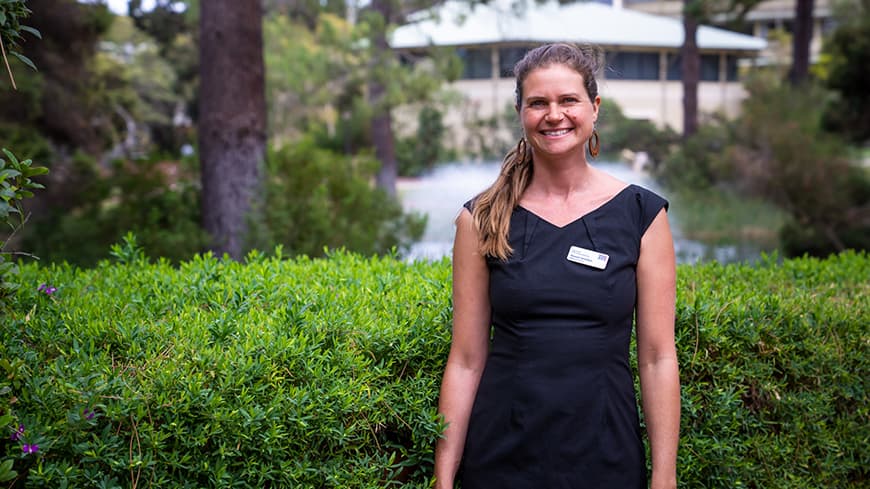
Naomi is an Associate Professor of climate justice and Associate Director of Edith Cowan University’s Centre for People, Place and Planet. She leads a team of climate justice researchers who use ecofeminist, decolonial and critical Participatory Action Research with communities, social movements and grassroots organisations. Naomi has used FPAR for 20 years, including in her own PhD, and she has supervised six PhD students using PAR informed by intersectional feminism, decoloniality and other critical theories.
FPAR supervision; FPAR with APWLD
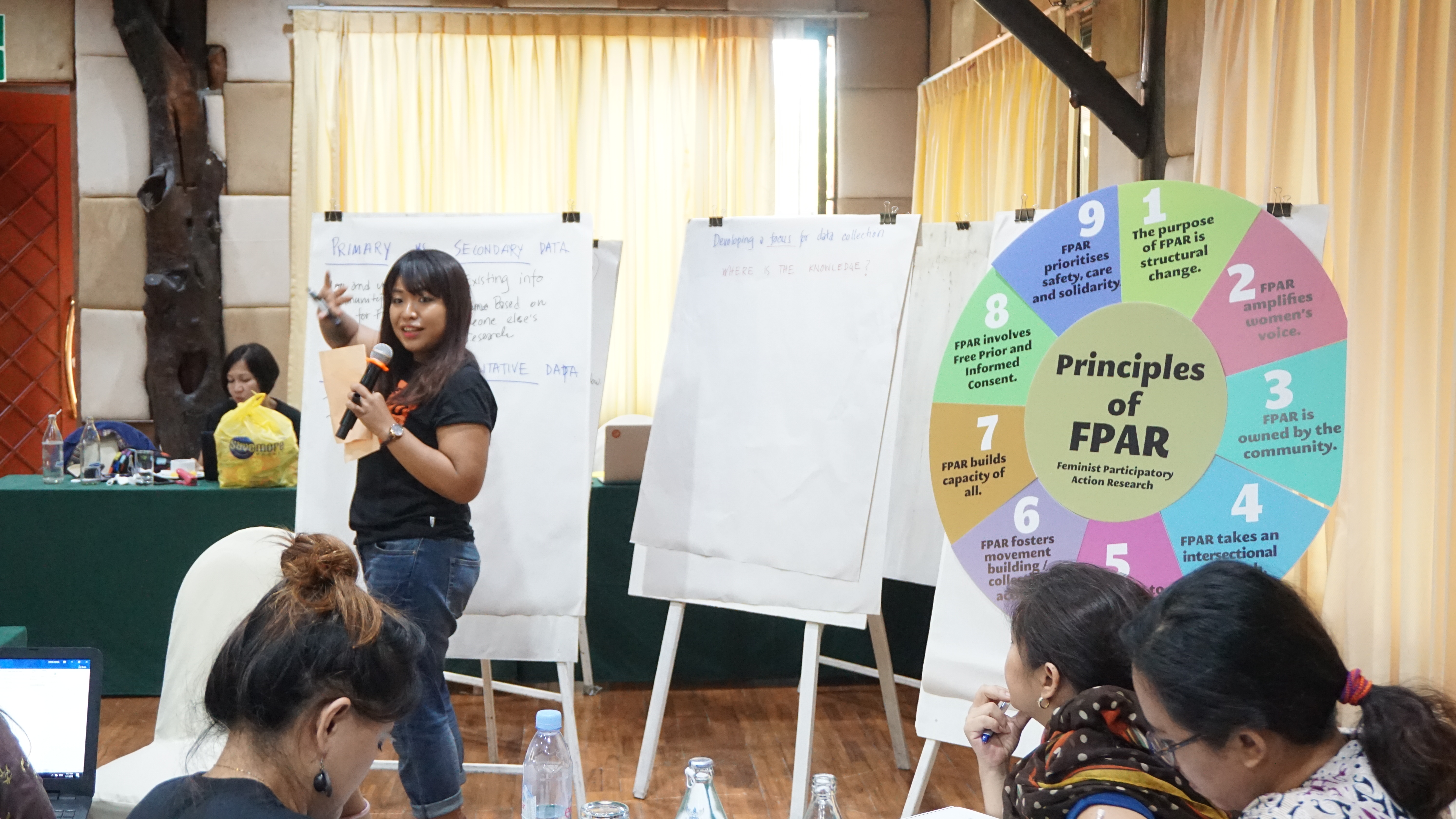
Trimita is one of the co-founders of FPAR Academy. She's a PhD candidate at Edith Cowan University researching Indigenous women’s organising against the coloniality of energy in the Philippines and Bangladesh using Ecofeminist Participatory Action Research (EcoFPAR).
Eco-FPAR in PhD; FPAR with APWLD; PAR with DRN
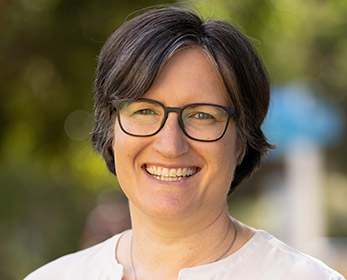
Verena is Professor of Communication and Associate Dean (Research) in the School of Arts and Humanities at Edith Cowan University. Verena’s work focuses on creative research approaches and communication for social change. She has led numerous award-winning research and production projects with donors, government and NGO partners in the areas of health communication, gender equality and education. Verena has mentored cohorts of researchers and practitioners in cross-cultural contexts in meaningfully applying participatory filmmaking, digital storytelling, and more broadly creative and co-design research methods. Verena facilitates these participatory research processes in collaboration with community groups and works with institutions and organisations that want to strategically integrate creative approaches into social change programs.
PAR supervision
Kylie is a wadjela (non-Indigenous) woman who lives and works on Binjareb Noongar Boodja In the south west of Western Australia. She is an early-career researcher and Sustainability Lecturer who uses critical, decolonial and feminist approaches to Participatory Action Research to advance positive eco-social change and justice in the context of a changing climate and intersecting oppressive systems. She mostly works with community groups, activists, social service organisations and Aboriginal Community Controlled Organisations. For her PhD, she coined “movement-based PAR” for work with diverse climate justice activists and advocates and was interested in centring care-full and relational ethics and practices in climate-justice research and action.
Movement-based PAR in PhD
Bronte is a wadjela PhD candidate based on Wardandi Noongar Boodja in south-west Western Australia. Her PhD study, Just in Time: Imagining and Enabling the Climate-Just Transformation of Community Service Organisations in Western Australia, adopts eco-feminist participatory action research (Eco-FPAR) and poetic autoethnography to trace social change in real time at different levels of scale. Her recent poetry collection, Breath Back, explores her (meta)reflexive practice over the first 18 months of her PhD, including navigating the complexities of Eco-FPAR in practice.
Eco-FPAR in PhD
Trimita is one of the co-founders of FPAR Academy. She's a PhD candidate at Edith Cowan University researching Indigenous women’s organising against the coloniality of energy in the Philippines and Bangladesh using Ecofeminist Participatory Action Research (EcoFPAR).
Eco-FPAR in PhD; FPAR with APWLD; PAR with DRN
Cecilia is a late stage PhD candidate at Edith Cowan University researching girls participation and activism for water justice in Zimbabwe. Her study adopts a local, girl centered PAR, that is responsive to the complexities and cultural identities of Black African girlhoods. Cecilia uses FPAR in her work with feminist organisations to build feminist movements, research and evaluate programs.
Girl-centered PAR in PhD, FPAR with JASS
Naomi is an Associate Professor of climate justice and Associate Director of Edith Cowan University’s Centre for People, Place and Planet. She leads a team of climate justice researchers who use ecofeminist, decolonial and critical Participatory Action Research with communities, social movements and grassroots organisations. Naomi has used FPAR for 20 years, including in her own PhD, and she has supervised six PhD students using PAR informed by intersectional feminism, decoloniality and other critical theories.
FPAR supervision; FPAR with APWLD
Verena is Professor of Communication and Associate Dean (Research) in the School of Arts and Humanities at Edith Cowan University. Verena’s work focuses on creative research approaches and communication for social change. She has led numerous award-winning research and production projects with donors, government and NGO partners in the areas of health communication, gender equality and education. Verena has mentored cohorts of researchers and practitioners in cross-cultural contexts in meaningfully applying participatory filmmaking, digital storytelling, and more broadly creative and co-design research methods. Verena facilitates these participatory research processes in collaboration with community groups and works with institutions and organisations that want to strategically integrate creative approaches into social change programs.
PAR supervision